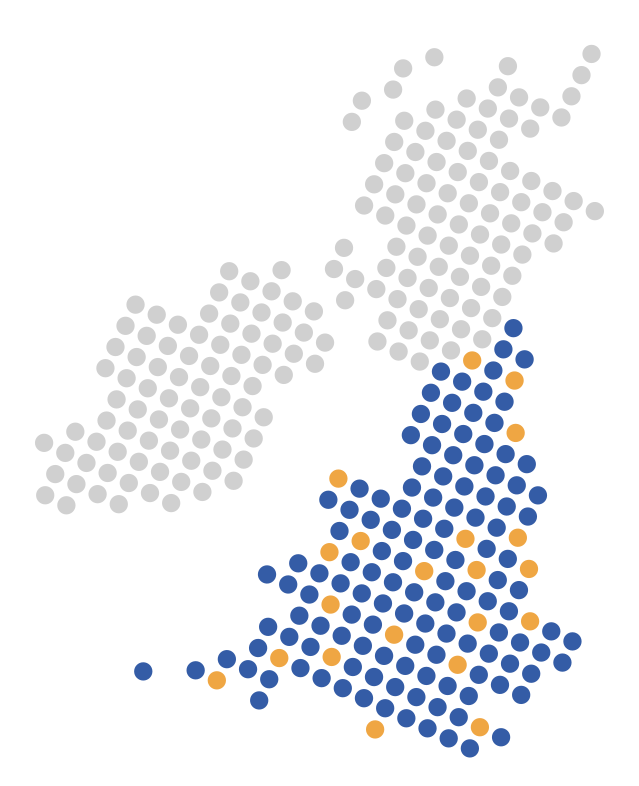


There are three types of RICS-accredited property survey available when buying a home in England or Wales: a Property Valuation Report, a Level 2 Survey and a Level 3 Survey. Each has a different scope, cost and level of detail, so the right choice depends on the age, condition and type of property you are buying.
RICS Level 3 Survey
A Level 3 Survey is the most comprehensive survey available and is tailored by the surveyor to the individual property. RICS recommend it for older homes, properties with non-standard construction (including timber-framed, thatched or stone-built properties) and any home that has been significantly extended or modified.
Unlike the Level 2, the Level 3 report addresses all accessible and concealed elements of the structure, gives detailed advice on repairs and maintenance, and can include specific sections addressing any concerns you raise before the survey takes place. Note that a Level 3 Survey does not include a market valuation unless you request one separately.
If you are considering an older home, a listed building, a cottage or a property in need of renovation, a Level 3 is the right choice.
Find out more about the RICS Level 3 SurveyRICS Level 2 Survey
The Level 2 Survey is the most commonly purchased survey for homes of conventional construction. RICS recommend it for homes built after 1900 that are brick-built with a tiled roof and no significant alterations.
The report covers all visible and accessible areas of the property and uses a traffic light condition rating system (green, amber and red) to flag areas that need attention. A market valuation and reinstatement figure for insurance purposes are available as optional add-ons when you book.
If you are buying a mid-terrace, a modern semi-detached or a relatively straightforward Victorian property in reasonable condition, this is likely the survey for you.
Find out more about the RICS Level 2 SurveyProperty Valuation Report
A Property Valuation Report is the most basic of the three RICS options. It provides an independent professional valuation of the property, which can be used to check you are not overpaying and to support price renegotiation if the valuation comes in lower than the agreed sale price.
It does not include a condition assessment or identify defects, so it should not be used as a substitute for a full survey. It is also distinct from a mortgage valuation, which is carried out by the lender for their own purposes and offers you no protection as a buyer.
Find out more about the Property Valuation ReportHouse survey comparison
Take a look at the table below to get a clear understanding of what each of the three RICS survey levels includes. Use it to decide which level of service your property requires.
| How do the surveys compare? | Property Valuation | RICS Level 2 Survey | RICS Level 3 Survey |
|---|---|---|---|
| Helps you make an informed decision on whether to proceed, reconsider or renegotiate on the purchase | |||
| Identifies visible defects and potential problems including inspection of roofs, chimneys and external surfaces from ground level | |||
| Traffic light condition ratings (green/amber/red) for easy reference | |||
| Prepares you for potential costly repairs after moving in | |||
| Highlights urgent issues needing immediate attention | |||
| Advice for your solicitor on observations that may affect the legal title | |||
| Completed by a fully qualified RICS-accredited surveyor from our national panel | |||
| Independent market valuation to help prevent overpaying | |||
| Building reinstatement cost for insurance purposes | |||
| Appropriate for standard properties built after 1900 of conventional construction | |||
| Exhaustive report covering construction, defects and concealed elements | |||
| Appropriate for all property types regardless of age, construction or condition | |||
| Ongoing advice with professional recommendations on repairs and maintenance | |||
| Appropriate for older, unusually constructed or extensively modified properties | |||
| Get Property Valuation quote | Get RICS Level 2 Survey quote | Get RICS Level 3 Survey quote |
Level 2 vs Level 3: which survey is right for your property?
The question we hear most often is whether to go for a Level 2 or a Level 3 Survey. The answer largely comes down to the age, construction type and condition of the property you are buying.
A Level 2 is well suited to most homes built after 1900 that are in reasonable condition and have not been heavily extended or altered. If the property is structurally straightforward, you are unlikely to need the additional depth a Level 3 provides.
A Level 3 is the better option for any property built before 1900, homes with non-standard roof or wall construction, properties that have been substantially extended, and any home where you already have concerns about its condition. The cost difference between the two surveys is typically modest when weighed against the potential cost of missing a significant structural defect.
If you are not sure which survey suits your property, our surveyors across England and Wales are happy to advise before you book.
Not sure which survey you need? We can help.
If you are still weighing up which survey is right for your property, call us on 0800 022 4428 or fill in the form below and we will get back to you.
Frequently asked questions about house surveys
What is the difference between a Level 2 and a Level 3 survey?
A Level 2 Survey covers visible and accessible areas of a standard property and is suited to most homes built after 1900. A Level 3 is a more in-depth inspection that covers concealed and accessible elements of the structure and is recommended for older, non-standard or heavily modified properties. Both are carried out by a RICS-accredited surveyor. See our Level 2 Survey page for a full breakdown.
Should I get a Level 2 or Level 3 survey?
For most homes built after 1900 that are in reasonable condition and of conventional construction, a Level 2 Survey is the right choice. A Level 3 is recommended if the property was built before 1900, has non-standard construction such as timber frame or thatch, has been significantly extended or is in poor condition. If in doubt, our surveyors are happy to advise before you book.
What are the three types of property survey?
The three RICS survey levels are the Property Valuation Report, the RICS Level 2 Survey and the RICS Level 3 Survey. Each has a different scope and level of detail. A Property Valuation covers market value only, a Level 2 covers visible condition with a valuation available as an optional add-on, and a Level 3 is the most thorough, covering all accessible elements of the structure in depth.
What devalues a house in a survey?
Findings that can significantly affect a property's value include structural movement or subsidence, significant damp, roof defects, outdated or unsafe electrics, drainage problems and timber decay. The more serious the defect and the more costly the repair, the greater the likely impact on the negotiated price.
What are the risks of skipping a survey?
Without a survey you have no independent assessment of the property's condition before exchange of contracts. Any defects that come to light after completion become your responsibility. Significant structural or condition issues can be costly to repair and may also affect your ability to sell or remortgage the property in future.
What used to be called a building survey?
The Building Survey was rebranded by RICS in 2021 and is now known as the RICS Level 3 Survey. The scope and purpose remain the same. It is still the most comprehensive survey available and the one RICS recommend for older or non-standard properties.
What used to be called a HomeBuyer Survey?
The HomeBuyer Report was also rebranded in 2021 and is now called the RICS Level 2 Survey. It remains the most popular choice for buyers of homes of conventional construction. A market valuation is available as an optional add-on when you book.
Do I need a survey when buying a house?
Having a survey carried out is not a legal requirement, but it is strongly recommended. A survey can identify defects you may not be aware of, give you grounds to renegotiate the asking price and help you budget for repairs after you move in. Choosing not to have one means taking on the risk that any structural or maintenance issues will only come to light once you have completed the purchase.
Can I use a survey to negotiate a lower price?
Yes. If a survey reveals defects or the valuation comes in below the agreed sale price, you have a reasonable basis to go back to the seller and renegotiate. This is one of the most practical reasons to have a survey carried out, regardless of which level you choose.
How much do the different RICS surveys cost?
Survey costs vary depending on the type of survey, the size of the property and its location. As a general guide, a Property Valuation is the least expensive, followed by a Level 2 Survey, with a Level 3 Survey typically costing the most due to its greater depth. See our house survey cost guide for up-to-date price ranges.
How long does each type of survey take?
A Property Valuation typically takes a few hours. A Level 2 Survey generally takes between two and four hours depending on the size of the property. A Level 3 Survey is the most time-consuming and can take a full day or more for larger or more complex properties.
What areas of England and Wales do you cover?
We cover all of England and Wales through our national panel of RICS-accredited surveyors. Our surveyors work locally across major cities and regions including London, Birmingham, Manchester, Bristol, Leeds, Cardiff, Liverpool and many more. Find a surveyor in your area or use our instant quote tool to check coverage and pricing in your location.